How A NASA Balloon Launched An Exoplanet Experiment—despite The Shutdown
uaetodaynews.com — How a NASA balloon launched an exoplanet experiment—despite the shutdown
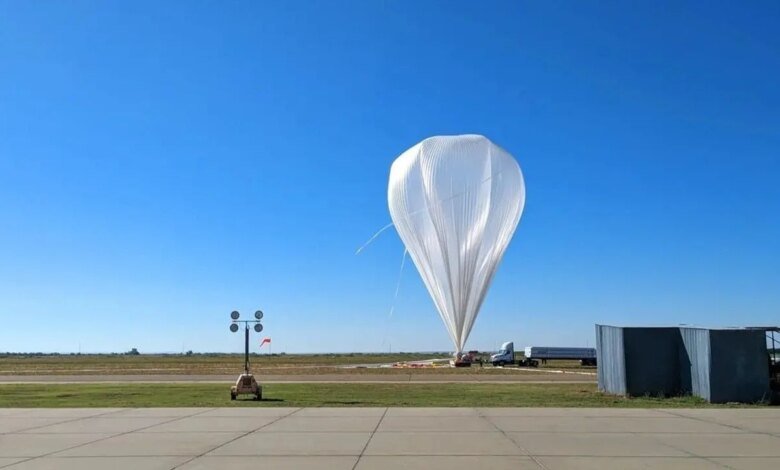
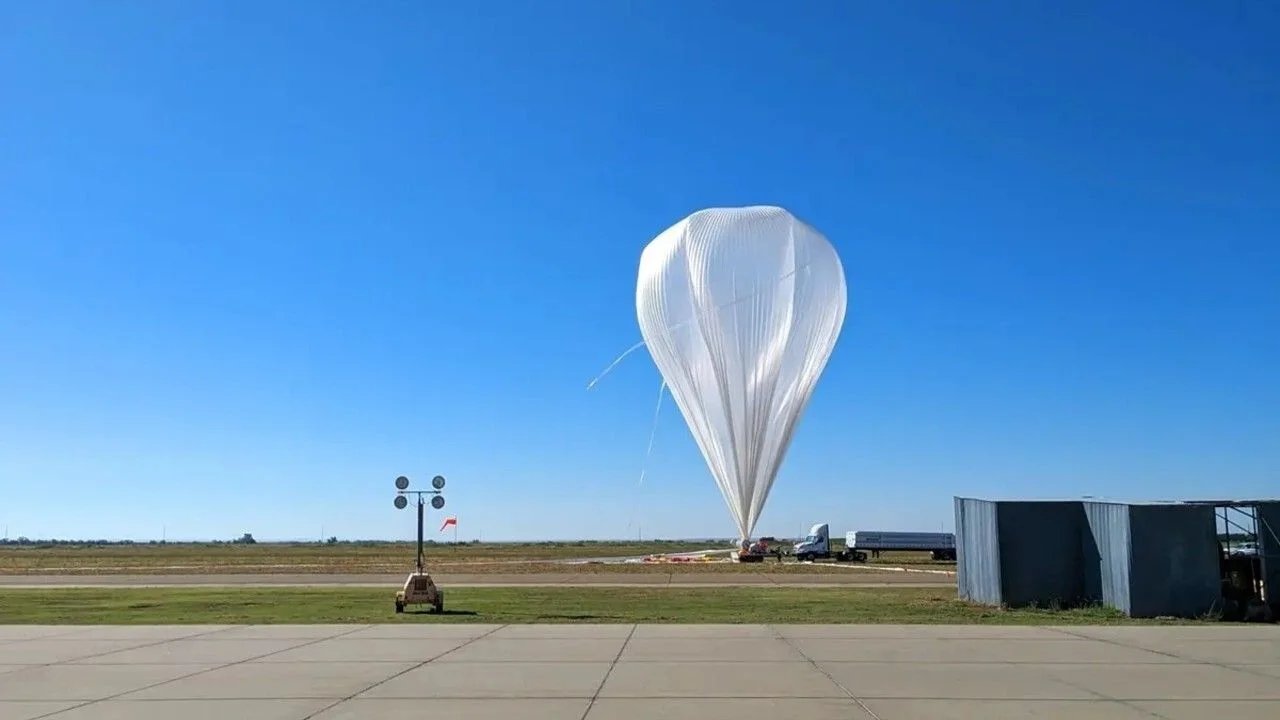
A special exemption allowed a NASA-funded weather balloon to launch as planned Oct. 1, despite the ongoing government shutdown that began that day. But news about the balloon, and an exoplanet-hunting experiment on board, got a little confused after touchdown.
When the balloon landed Oct. 2 in farmland in Hale County, Texas after a flight high in Earth’s atmosphereseveral local news reports suggested the balloon had crashed (or landed unexpectedly) — but that’s not what happened, said experiment principal investigator Christopher Mendillo. “I’m sure they just had no information to go on and made some assumptions,” Mendillo, a University of Massachusetts Lowell exoplanet researcher, told Space.com. His team has been working on iterations of the planet-seeking experiment since 2005, launching on both sounding rockets and balloons.
“A team of talented NASA professionals monitors the (balloon) flight for the entire duration, and carefully chooses the landing site to avoid population centers, energy infrastructure, bodies of water, mountains, etc.,” Mendillo said via email. “Farm and ranch landings are quite common, and it is a credit to those involved that they found such a nice soft place to put us down (…) The balloon has no guidance or propulsion of any kind on board. The flight team incorporates real-time tracking and weather data to predict exactly where the payload and balloon will land when they terminate the flight — within some range of uncertainty.”
An unusual flight
NASA personnel worked hard earlier this fall to get Mendillo’s experiment launched despite the looming shutdown, which furloughed 15,000 agency personnel after lawmakers in Washington, D.C. failed to pass a government funding bill before fiscal year 2025-26 began on Oct. 1.
The agency got an exemption to proceed with the balloon launch, he said. (NASA officials affiliated with the flight were not available for comment after Space.com reached out, due to the shutdown, according to automated out-of-office responses.)
The need to launch Oct. 1, and on no other date, was because of a phenomenon known as “atmospheric turnaround”, which allows the balloon to launch in the morning and to stay up through the night. Turnaround — a change in wind velocity — happens twice a year in the mid-latitudes of the stratosphere, a part of Earth’s atmosphere, in the early spring and the late summer.
“Most years, turnaround lasts one to two weeks; this year it was one day, Oct. 1,” Mendillo said. “There was only one day in 2025 where we could launch our mission and meet our science and technology goals — and that was the day the government happened to shut down.”
NASA launched Mendillo’s exoplanet experiment aboard a research balloon provided by the Columbia Scientific Balloon Facility in Palestine, Texas (which is roughly two hours southeast of Dallas). The facility is managed by a balloon program office located at Virginia’s Wallops Flight Facilityoperated by NASA’s Goddard Space Center in Maryland.
The facility’s website says it launches uncrewed and large (400-foot diameter) high-altitude balloons rated to fly to about 120,000 feet (nearly 37 km, or roughly the height of skydiver Felix Baumgartner’s high-altitude jump in 2012). Columbia also tracks the balloons, and recovers the experiments on board.
Mendillo’s flight, called 758N, lifted off as planned Oct. 1 from Fort Sumner, New Mexico (east of Alburqueque) as part of the fall 2025 flight campaign. Observations of the exoplanets wrapped up at about 1 a.m. local on Oct. 2, Mendillo explained, but the flight team waited until 6 a.m. to terminate the flight to allow for a safe landing zone. (You can see the flight path herecourtesy of NASA, and an alternate map of the path at the ballooning site StratoCat.)
NASA recovered the payload on Oct. 2 and officials drove it back to the launch facility that same day, Mendillo said. The experiment is now sitting at Wallops, awaiting the end of the shutdown so that it can be shipped back to Mendillo’s university. But some results are already available.
A NASA research probe crash-landed in a Texas farm last week after being blown off course.The probe came down on the farm of Ann and Hayden Walter in Edmonson, prompting the family to call the local sheriff’s department. pic.twitter.com/ENjwq5tKx5October 10, 2025
Exoplanet hunter
Mendillo’s experiment is called Planetary Imaging Coronagraph Testbed Using a Recoverable Experiment for Debris Disks (PICTURE-D). The project is funded by a $7-million, five-year grant from NASA’s Astrophysics Research and Analysis Program, according to UMass Lowell.
As the experiment’s name implies, PLANET-D aims to advance technologies for exoplanet imaging—meaning taking direct pictures of exoplanets, as they orbit their parent stars. That’s no easy feat for a telescope, as the stars are quite bright and the exoplanets are only faintly visible in dim reflected light, by comparison.
“We have been working on this specific experiment since 2022, and versions of it since 2005,” said Mendillo, paying tribute to a large team of faculty, post-doctoral researchers, and students ranging in age from high school to graduate researchers. Several iterations have flown before: two NASA sounding rockets in 2011 and 2013 launched PICTURE and PICTURE-B, respectively, and the PICTURE-C experiment also flew twice on a high-altitude balloon in 2022.
“Our mission is designed to directly image distant solar systems in search of dust rings, asteroid belts and exoplanets,” Mendillo said of PICTURE-D, which carries a 23-inch (60-centimeter) telescope. “We observed four different stars, including one binary (two-star) system, and collected thousands of images. We are just starting to catalog and process those data, and hope to present our findings in the next six months.”
The first science result from PICTURE-D was an image of the Gamma Cassiopeiae binary star system located, as the name suggests, in the constellation Cassiopeia. “We took this image during the day, when sky backgrounds were too high for exoplanetary imaging,” Mendillo said.
The primary star, called A, was blocked in the telescope’s view by an instrument known as a coronagraph—a device that obscures the bright light of an object to let fainter objects nearby shine through. As a result, the secondary “B” star is visible in the image despite being 3,000 times dimmer than its companion.
“This image illustrates the difficulty of imaging exoplanets in reflected visible light. If that secondary star were actually a planet, it would be one million times dimmer,” Mendillo said.
The researchers got the data they needed, although there were some minor issues during the flight that degraded the performance — something Mendillo says the team hopes to address the next time they fly PICTURE-D, in 2026 or 2027.
Eventually, the technologies they fly may be used on a future flagship NASA mission, such as the proposed Habitable Worlds Observatory aiming to gaze at Earth-sized worlds in the 2040s.
Disclaimer: This news article has been republished exactly as it appeared on its original source, without any modification.
We do not take any responsibility for its content, which remains solely the responsibility of the original publisher.
Disclaimer: This news article has been republished exactly as it appeared on its original source, without any modification.
We do not take any responsibility for its content, which remains solely the responsibility of the original publisher.
Author: uaetodaynews
Published on: 2025-10-15 12:08:00
Source: uaetodaynews.com