Play-Doh fans left gobsmacked after learning what the toy was REALLY made for – as they say they ‘can’t believe’ it’s true
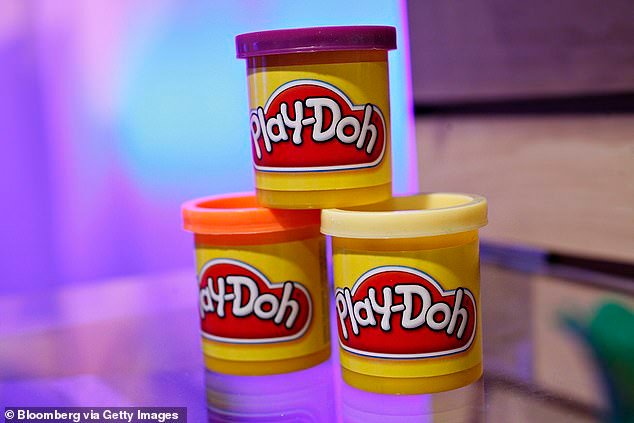
Play-Doh fans left gobsmacked after learning what the toy was REALLY made for – as they say they ‘can’t believe’ it’s true
People have been left gobsmacked after discovering the original purpose of the children’s modelling clay Play-Doh.
The soft, putty-like substance is a beloved toy owned by millions all over the world and is known for sparking delight among its younger patrons.
Though it is now mainly used for crafts in homes and schools, Hasbro-owned Play-Doh was in fact invented for a very different purpose when it first launched.
Revealing the surprising history behind the colourful putty, an Instagram page called @fascinating_historic_world shared a handful of products ‘that became successful because customers used them completely wrong’.
Far from a children’s toy, Play-Doh was originally created as a wall cleaner as a way to remove coal residue and soot stains from inside the home.
It was first invented by Noah McVicker for Cincinnati-based soap manufacturer Kutol Products during the 1930s as a wallpaper cleaner.
Created during a period where coat heating was commonplace, Kutol originally designed the clay as a tool to remove soot left by coal generated heaters.
It was created for users to stamp onto stained wallpaper to absorb and remove dark stains that couldn’t be extracted by regular cleaning alone.

People have been left gobsmacked after discovering the original purpose of the children’s modelling clay Play-Doh. Stock image

Revealing the surprising history behind the colourful putty, an Instagram page called @fascinating_historic_world, shared a handful of products ‘that became successful because customers used them completely wrong’. Stock image
But by the the 1950s, the use of the malleable putty had changed drastically. As World War II came to a close, it soon became clear that there was no longer a need for wallpaper cleaning putty, and Play-Doh was reinvented as a children’s toy.
As the Instagram video explained: ‘When schools started using the non-toxic cleaning compound for children’s art projects, the company rebranded their wallpaper cleaner as the world’s most popular children’s toy and creative medium.’
People were left gobsmacked by the discovery – and admitted they hadn’t known it was ever used for anything other than a children’s toy. One person wrote jokingly wrote: ‘Play Doh: Back when wallpaper was made of actual paper.’
A second said: ‘Just looked up all these products up. Cannot believe this is all true, but I shouldn’t be surprised. There was a time where cocaine was used as sinus medicine so I should not be surprised.’
A third remarked: ‘I knew it! When I played with Play-Doh. I always thought it smelled very industrial.’
The increasing popularity of in heating applications meant that coal was no longer mainstream, and the demand for the cleaning product plummeted.
Additionally, the invention of vinyl-based wallpaper meant there was no longer a need for specialised products.
It was the nephew of the inventor, Joe McVicker, who first came up with the idea to change the purpose of the clay.


People were shocked by the discover. One wrote jokingly wrote: ‘Play Doh: Back when wallpaper was made of actual paper’
As the brother-in-law of nursery school teacher Kay Zufall, who had seen a newspaper article about making art projects with the wallpaper cleaning putty
The once cleaning compound was re-modelled as a toy to be used for children’s art projects and for play.
In 1956, the tactile dough was presented at an educational convention with several prominent department stores rushing to cram their shelves with the exciting new product.
A year later, it was being advertised on TV, including on a number of influential shows. This further increased sales.
It comes after people were left shocked after discovering what the pink card readers in London Underground stations are.
Millions of Londoners and tourists will tap on and off the tube everyday, but even the most knowledgeable Londoners are often left wondering why some Oyster card readers are a different colour.
The majority of Oyster card readers in the capital are yellow, and are used at stations that don’t have gates to allow passengers to tap in and out.
But some Londoners have admitted they have no idea what to do when they see a pink oyster card reader.

The once cleaning compound was re-modelled as a toy to be used for children’s art projects and for play. Original Play Doh packaging pictured
The device is actually a ‘route validator’ – and not used for tapping in or out – but instead ‘proving’ that the passenger didn’t travel through Zone 1, if tapped at the right time, they can cut the cost of a commuter’s journey.
When a passenger changes trains, they should tap a pink reader and, finally, at the end of their journey they should tap out on a yellow reader.
If someone forgets to tap the pink reader during their multi-leg journey, they will ‘pay the higher pay as you go fare that includes Zone 1 travel,’ according to the Transport for London website.
Busy stations such as Highbury & Islington, Hackney Central/Hackney Downs and Stratford all have pink card readers, along with a host of others.
Source link

Latest news, essential insights and practical guides to life in Italy from The Local, Europe's leading independent voice