The iconic American author who is the most censored in US schools
The iconic American author who is the most censored in US schools
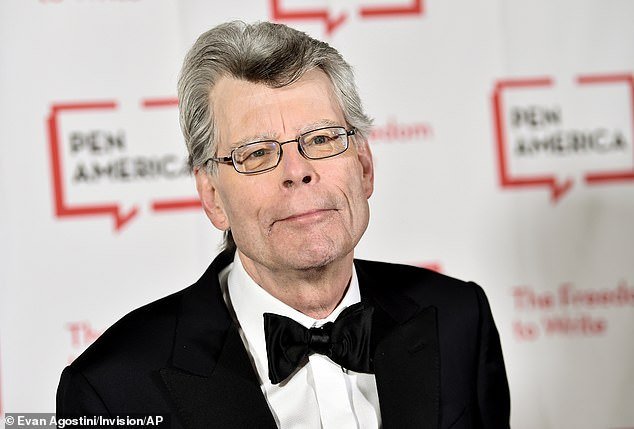
He may be one of the most beloved writers of all time, but according to a shocking new report, Stephen King was the most banned author in US schools last year.
Stephen, 78, has released a slew of iconic books over the course of his decades-long career, including some that were turned into massive movies like Carrie, The Shining, Stand by Me, Misery, The Shawshank Redemption, The Green Mile, and It, amongst others.
Despite his novels being read by millions across the globe, PEN America has now revealed that Stephen was the author who had the most books removed from schools during the 2024-2025 school year.
The organization explained in a new report released on Wednesday that 6,870 books were ‘completely removed from availability to students’ in schools across 23 states due to ‘parent or community challenges, administrative decisions, or in response to direct or threatened action by governmental officials.’
Of those, 206 of them were written by Stephen, who has been dubbed as the ‘King of Horror’ thanks to his unrivaled ability to write chilling novels in the genre.
There were 2,308 different authors affected, with Stephen leading the list followed by Ellen Hopkins, Sarah J. Maas, Jodi Picoult, Yusei Matsui, and Elana K. Arnold.
According to PEN America, the censorship ‘infringes students’ free speech rights’ and has ‘left a detrimental mark on thousands of creative people in the literary world.’
‘Book bans leave authors at increased financial risk due to a reduction in school visits or events, and the potential subsequent impact on their future book sales,’ it added.

He may be one of the most beloved writers of all time, but according to a shocking new report, Stephen King (seen in 2018) was the most-banned author in US schools last year

PEN America explained in a new report released on Wednesday that 6,870 books were ‘completely removed from availability to students’ in schools across 23 states (stock image)
‘Some authors have reported the emotional impacts of these book bans on their creativity, citing concerns about potential blowback to future works, which cause them to feel the need to self-censor.
‘In this way, the book banning campaign has had an impact that ranges far beyond the specific titles and school districts, ultimately leaving many readers without access to current stories, and jeopardizing the stories yet to be imagined by these creators.’
The report found that the book that was banned the most in schools last year was A Clockwork Orange by Anthony Burgess.
The 1962 dystopian novel is described as ‘a frightening fable about good and evil and the meaning of human freedom’ and follows a ‘violent teenage delinquent in a bleak future England.’
It was banned in 23 schools during the 2024-2025 school year.
In second place there was a tie between the tomes Breathless by Jennifer Niven and Sold by Patricia McCormick, which were both banned from 20 schools.
The first book is about a teen who moves to a remote Georgia island after her parents’ separation and falls in love with the local guide.
The latter tells the story of a 13-year-old girl from Nepal who was sold into sexual slavery.

Of those, 206 of them were written by Stephen (seen in 2013), who has been dubbed as the ‘King of Horror’ thanks to his un-matched ability to write chilling novels in the genre


2,308 different authors were affected, with Stephen leading the list followed by Ellen Hopkins (left) and Sarah J. Maas (right)
In a shocking move, Wicked, the book that inspired the immensely popular Broadway show and movie series starring Ariana Grande and Cynthia Erivo, was banned in 17 different schools.
Other books that were commonly removed last year were Last Night at the Telegraph Club, A Court of Mist and Fury, Crank, Forever…, and The Perks of Being a Wallflower.
The report also broke the bans down by state, revealing that Florida had the most with 2,304, followed by Texas with 1,781, and Tennessee with 1,622.
The organization explained that many books are targeted ‘because of their content’ – usually ‘transgender people and diversity, equity, and inclusion.’
‘Since book challenges and removals exploded in 2021, books depicting same-sex and trans identities have been conflated as inherently “sexual,”‘ it said.
‘In sexualizing LGBTQ+ people, swaths of literature have been removed under the premise of removing “inappropriate” or “obscene” books.’
But PEN America noted that the censorship has ‘impacted a wide array of titles written for all sorts of audiences.’

The report found that the book that was banned the most in schools last year was A Clockwork Orange by Anthony Burgess


In second place there was a tie between the tomes Breathless by Jennifer Niven (left) and Sold by Patricia McCormick (right), which were both banned from 20 schools

In a shocking move, Wicked, the book that inspired the immensely popular Broadway show and movie series starring Ariana Grande and Cynthia Erivo, was banned in 17 different schools
‘Access to literature prepares our youth to confront the real world, offering a window into experiences otherwise unknown to them,’ it stressed.
‘However, diverse ideas and stories featuring protagonists from historically marginalized identities are often the first topics targeted by censors.’
While this phenomenon has been happening for years, it claimed that in 2025, ‘a new vector of book banning pressure has appeared – the federal government.’
It cited a series of executive orders released by President Donald Trump that, while weren’t taking direct aim at books, were used as ‘justification’ for a recent removal in July 2025 of almost 600 books from schools on military bases.
‘School districts today are surrounded by multiple and persistent local, state, and now federal pressures to ban books, with diminishing reasons not to,’ it concluded.
‘The result is a kind of everyday banning – the normalization and routinization of censorship as an expected part of public education in many parts of the country.
‘Opposing this will no longer take just counter-efforts to any one of these threats; it will require a similarly committed effort, rooted in recognition of the fundamental right to read.’
Source link

Latest news, essential insights and practical guides to life in Italy from The Local, Europe's leading independent voice