
A Patient With Neuralink Controls A Robot With The Power Of Thought: Video
uaetodaynews.com — A patient with Neuralink controls a robot with the power of thought: video
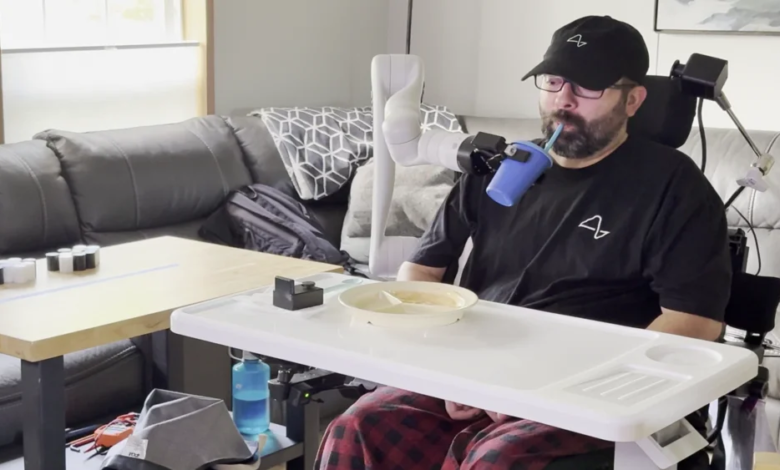
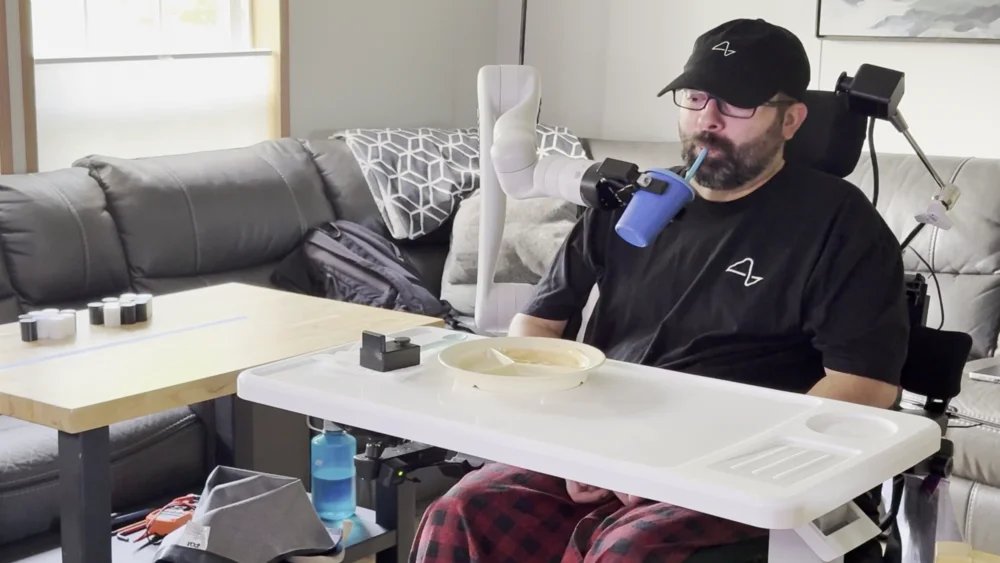
Amyotrophic lateral sclerosis (ALS) patient Nick Ray has regained the ability to act independently – he controls a robotic arm using only his thoughts. This became possible thanks to the Neuralink neuroimplant, Elon Musk’s company. The portal reports this Dallas Express.
During the demo posted NeurableRay brings the cup to his mouth, turns on the microwave and opens the refrigerator. He does all this without moving a single muscle – he just needs to think about the action.
“It was one of the most incredible experiences of my life. For the first time in many years, I was able to spend several hours in a row actively working, controlling the device with my thoughts,” admitted Ray.
How does the Neuralink implant work?
The coin-sized device, called N1, connects to the brain through ultra-fine threads, each thinner than a human hair. They integrate about a thousand electrodes that record neural impulses and convert them into digital signals. A chip implanted in the brain captures the electrical activity of neurons, converting it into commands that are transmitted via Bluetooth. These instructions control the robotic arm, allowing a person to perform everyday tasks.
This technology allows paralyzed people to control computers, cursors and even robots without physical effort. Neuralink calls it “reclaiming digital independence.”
From thought to movement
Ray became the eighth participant in Neuralink’s FDA-approved clinical trial called CONVOYwhich is testing the capabilities of a brain-computer interface (BCI) to help people with severe mobility impairments.
During three eight-hour sessions, he learned to perform a series of tasks: pick up objects, put on a hat, move objects on the table. In one test, he moved 39 cylinders in five minutes – a result that experts compare with successes in rehabilitation after a stroke.
The company notes that such advances not only restore patient autonomy, but also demonstrate the technology’s potential to control wheelchairs, robots and other devices.
Trials and errors
Neuralink’s first clinical trials began in 2024 after lengthy approvals from the US Food and Drug Administration (FDA). Previously, the department had refused the company due to safety concerns.
One of the first participants was Noland Arbaugh from Arizona, who, using a chip, learned to control a cursor and play video games simply by thinking about movement. Later, his device encountered a technical problem – some of the threads were disconnected from the brain tissue, but Neuralink solved it with a software update, improving signal processing algorithms.
According to the developers, the brain-computer interface could become the basis for a new era of neural technologies – from restoring mobility to controlling robotic systems and household appliances with the power of thought.
Neuralink also plans to use similar implants to help people with speech and vision impairments, and in the future to connect the brain directly to computers and even artificial intelligence.
Subscribe and read “Science” in
Telegram
Disclaimer: This news article has been republished exactly as it appeared on its original source, without any modification.
We do not take any responsibility for its content, which remains solely the responsibility of the original publisher.
Disclaimer: This news article has been republished exactly as it appeared on its original source, without any modification.
We do not take any responsibility for its content, which remains solely the responsibility of the original publisher.
Author: uaetodaynews
Published on: 2025-10-12 08:12:00
Source: uaetodaynews.com