

Pixel 10 vs Pixel 8: glow-up time!

Intro
And when we say incremental upgrades, it’s not like we are bashing the Pixels. The phone world is much more stable nowadays, gone are the yearly updates that overhaul models entirely.
The Pixel 8 was a safe bet — a solid performer with Google’s vision of AI and clean Android baked in. But the Tensor chip hasn’t been a performer since inception, and we were a camera short of calling it a “flagship” offer.
Pixel 10 vs Pixel 9 differences:
| Google Pixel 10 | Google Pixel 8 |
|---|---|
| New 3 nm Tensor G5 chip | Google Tensor G3 4 nm |
| Larger 6.3” display | 6.2” display |
| Higher brightness levels, 3,000 nits peak | 2,000 nits peak brightness |
| Triple camera setup (first time on base Pixel) | Dual camera setup — main and ultra-wide |
| Android 16 + a smarter AI assistant | Android 15, eligible for 16 |
| 30W wired charging Qi2 15W wireless Pixelsnap accessories | 27W wired charging 18 W wireless No magnets |
| 7 years of updates (until 2032) | 7 years of updates (until 2030) |
| $799 | $699 |
Table of Contents:
Design and Size
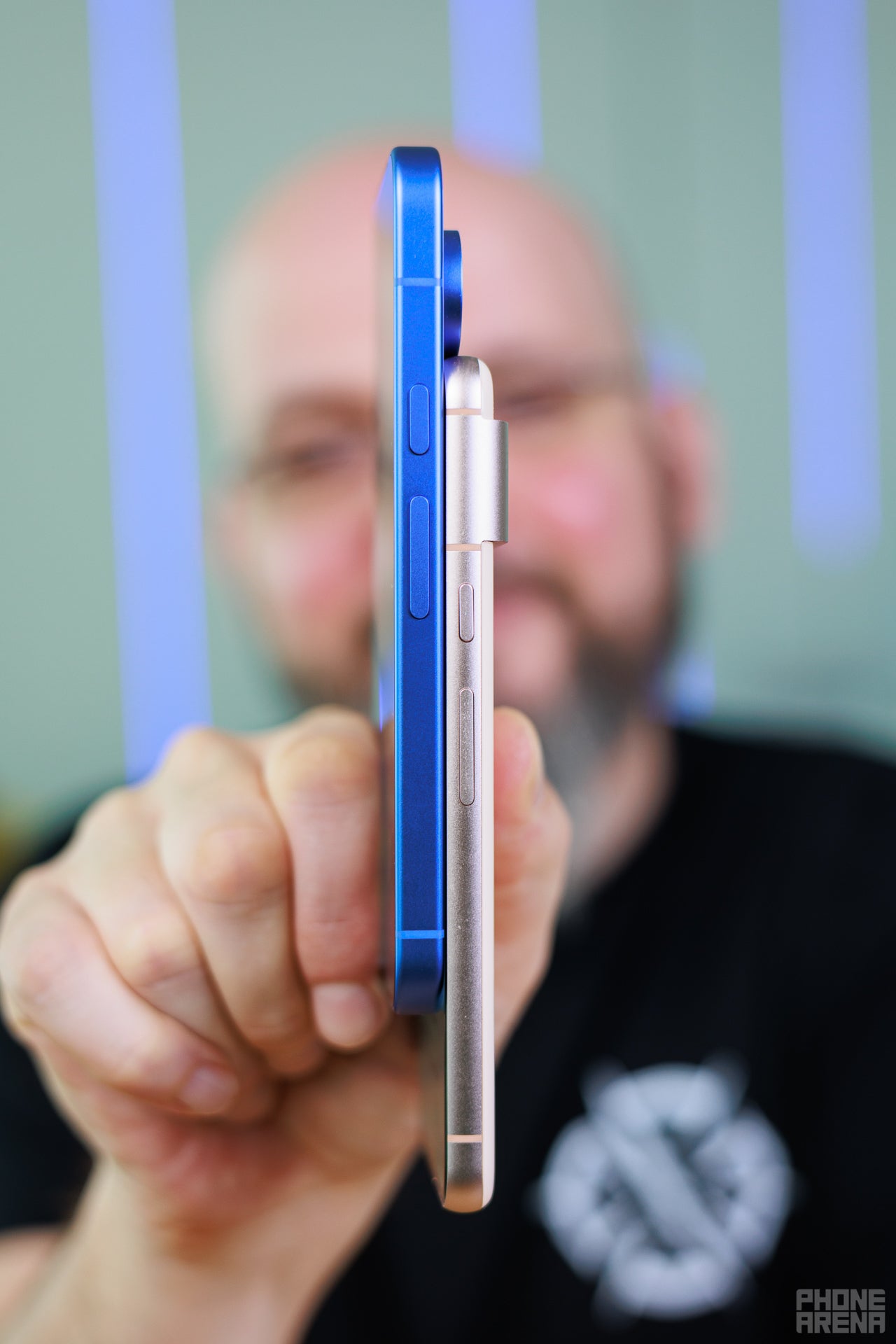
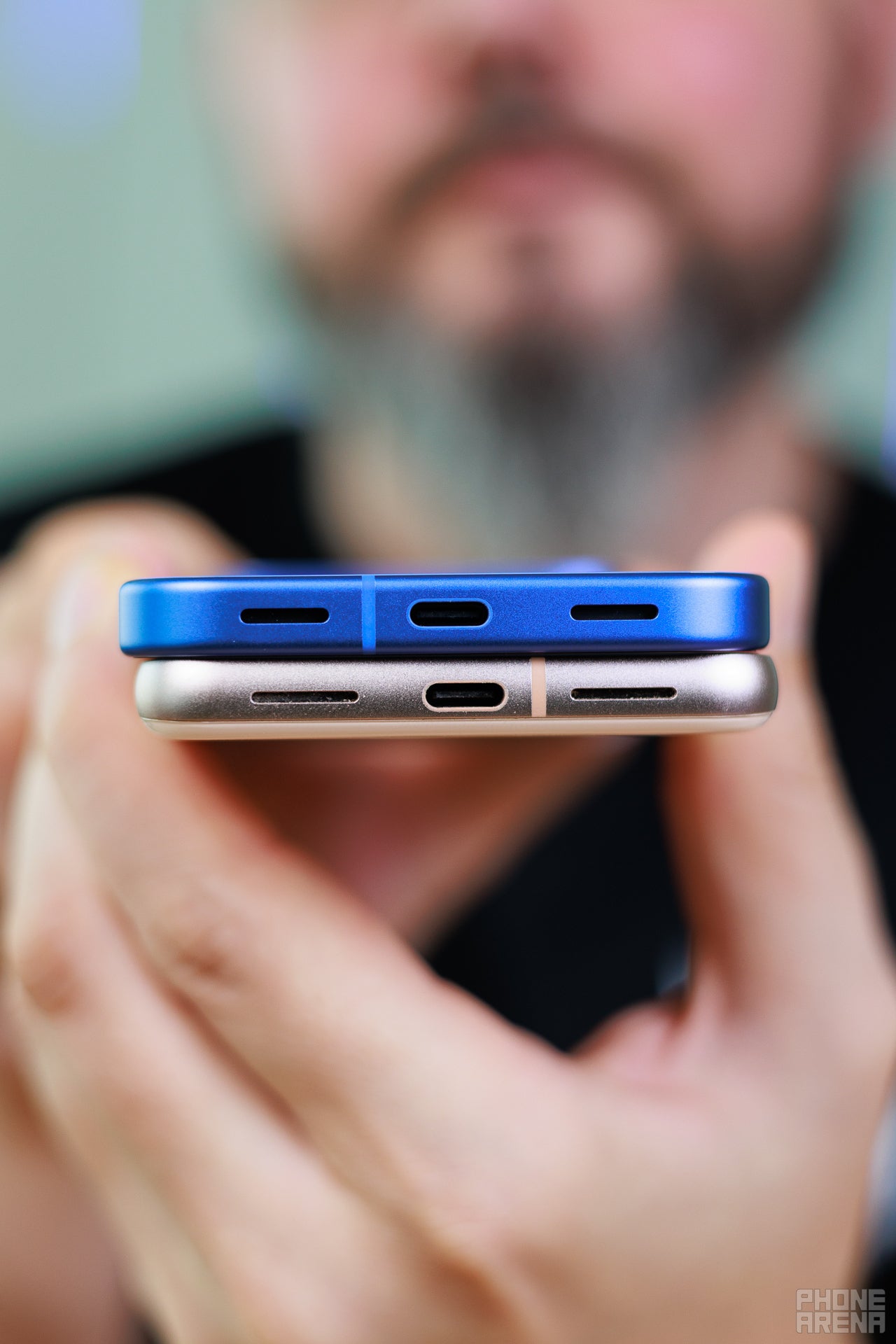
Unmistakably Pixel
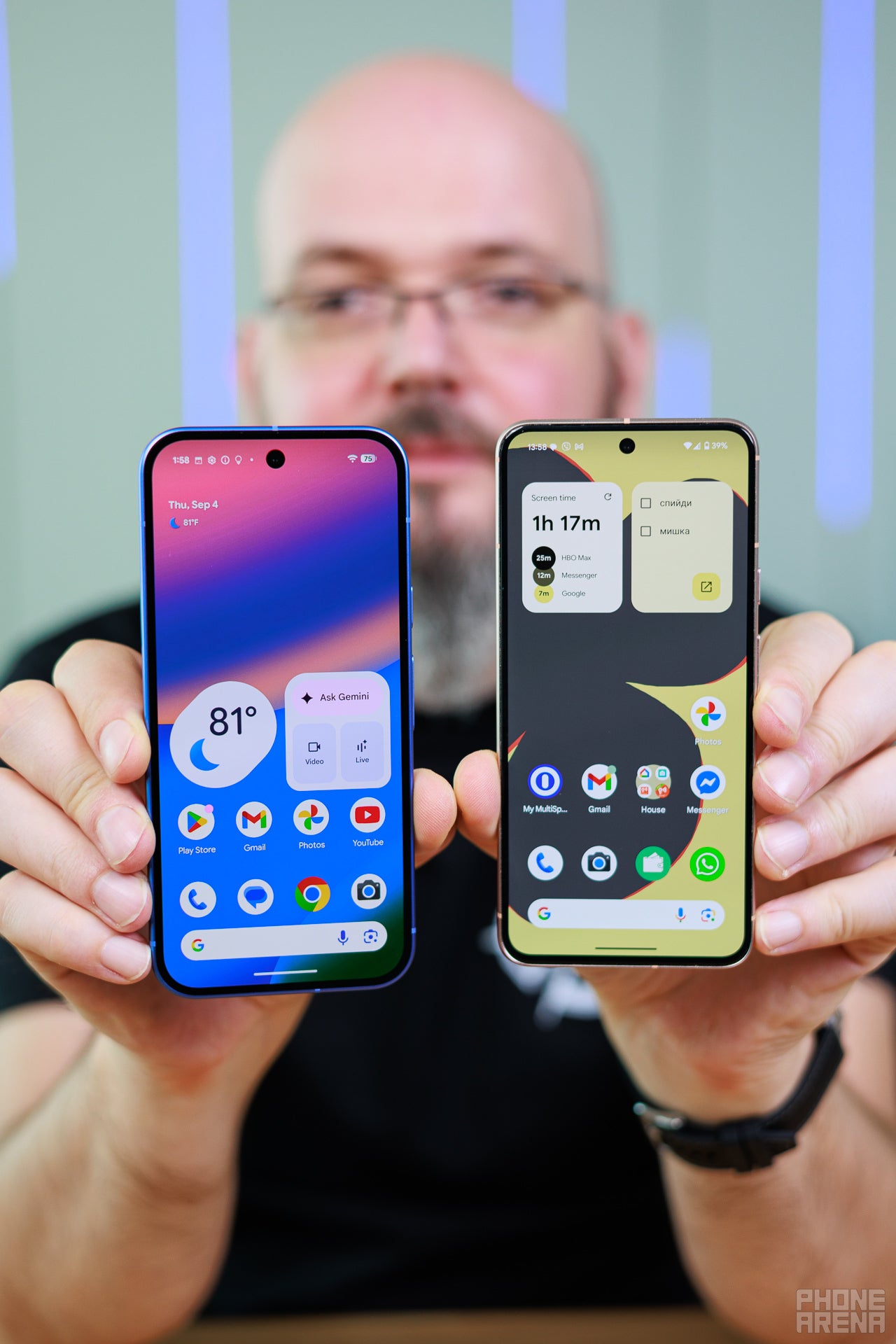

It’s a subtle evolution in materials, too. Both phones are to use aluminum and Gorilla Glass Victus, though the Pixel 10 is a Victus 2 sandwich. Basically, it’s the latest-gen of scratch- and shatter-resistant glass and you can’t do much better than that. Both phones are IP68 rated for dust-proofing and water-resistance.
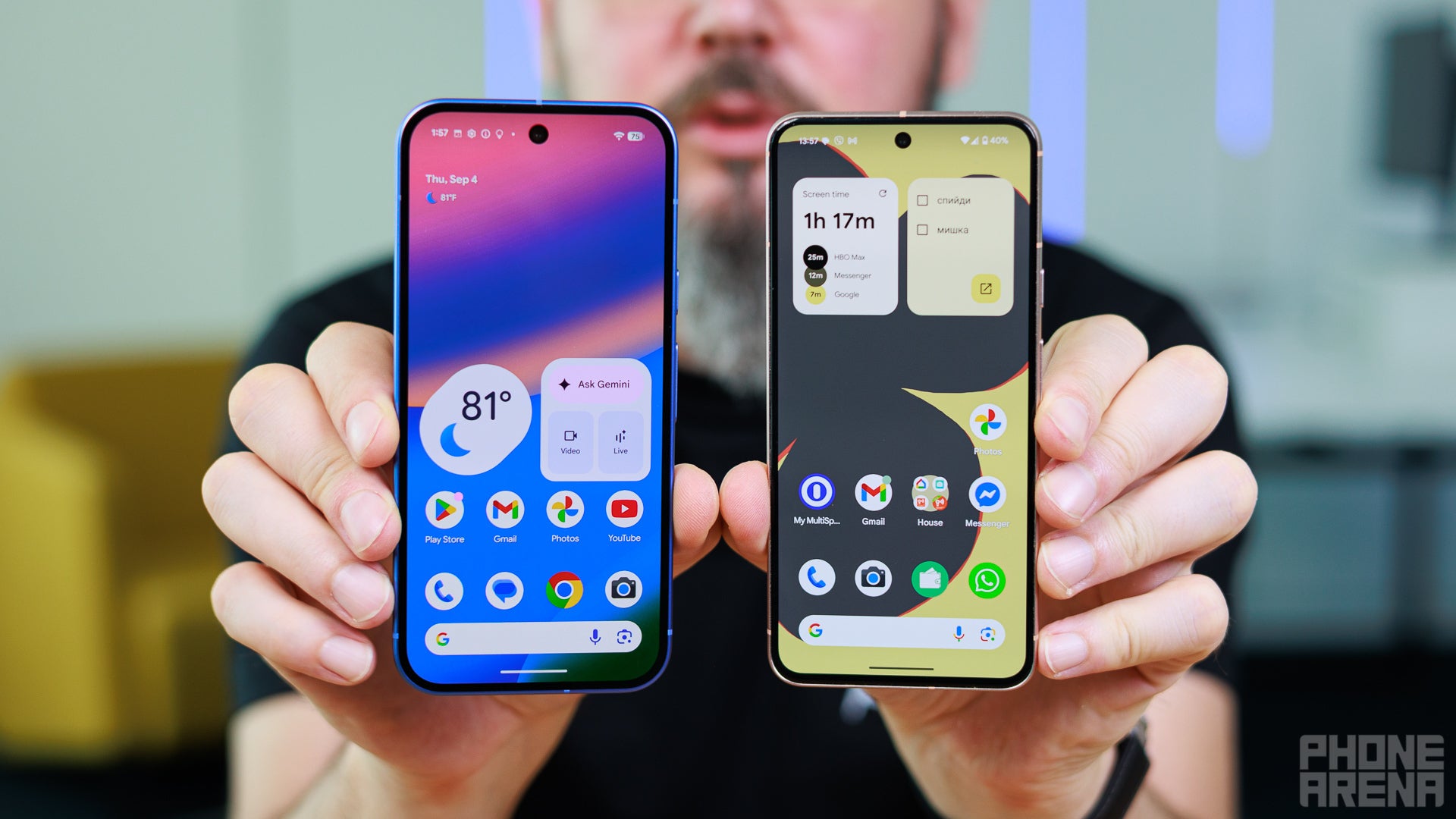
The base Pixels typically come with a couple of fun and vibrant color picks. The Pixel 10 is available in Indigo, Frost, Lemongrass, and Obsidian, where the Pixel 8 had playful picks like Mint, Obsidian, Rose, and Hazel.
Display Differences
The Pixel 10 is back in the game. It comes with a 6.3-inch OLED panel, pushing 3,000 nits peak brightness. HDR videos from YouTube, Instagram content, and your own library will look popping and vibrant even under direct sunlight.
Display Measurements:
Not only did the Pixel 10 get an update in brightness, it also measures closer to perfect color calibration. Not that the Pixel 8 was bad, as can be seen from the charts, but the Pixel 10 inched closer to that ideal whitepoint.
The Pixel 10 also maintains the cleaner, more symmetrical bezels introduced last year with the Pixel 9. It’s subtle stuff, but it adds polish. The extra-secure Face unlock that’s powered by AI returns. It’s also worth noting that, since the Pixel 9, the fingerprint scanner in these phones was upgraded to ultrasonic tech, while the Pixel 8 still uses the old optical one. Technically, ultrasonic is more accurate and can be faster plus slightly more secure.
Performance and Software
Tensor finally finds the way to the 3 nm line
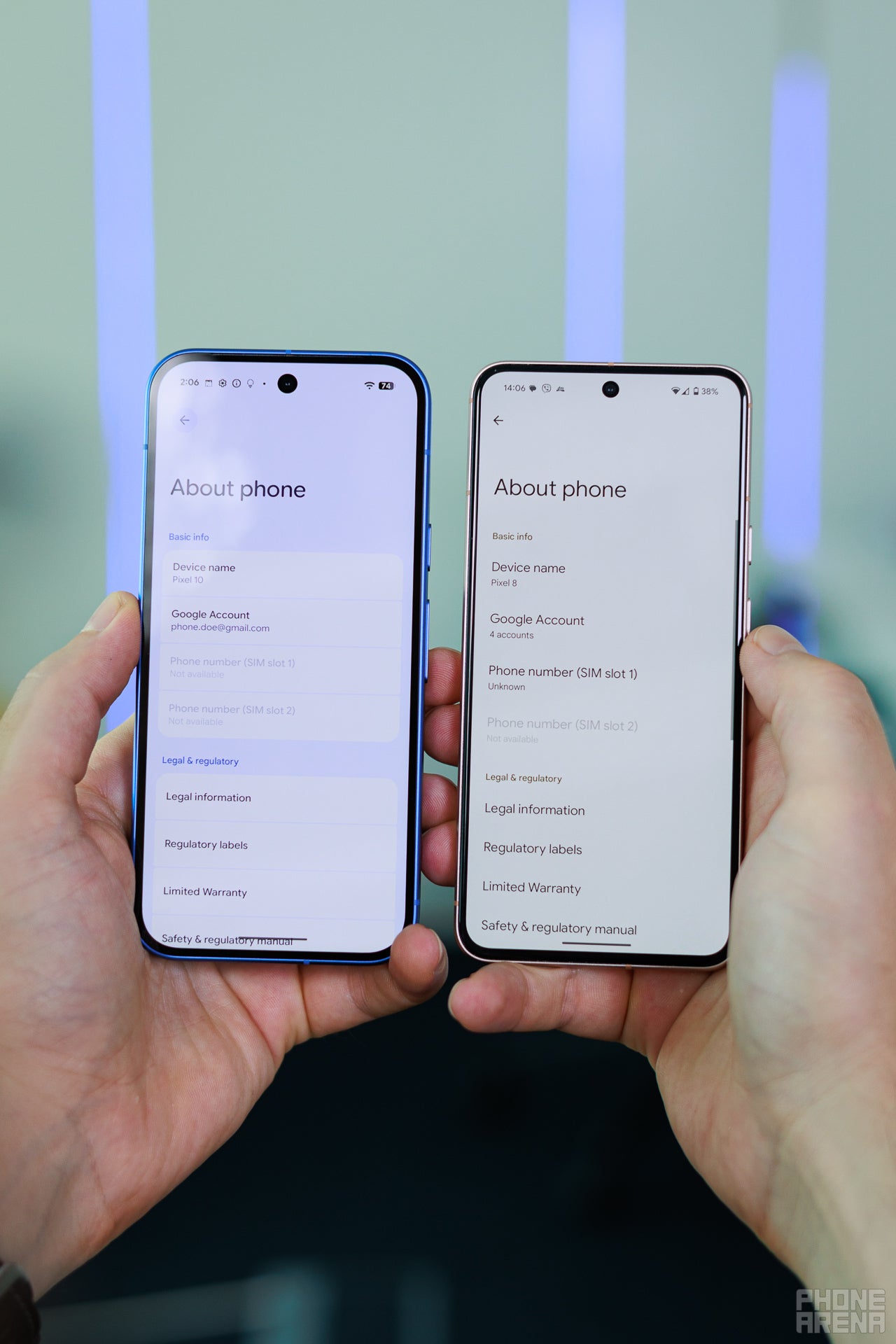
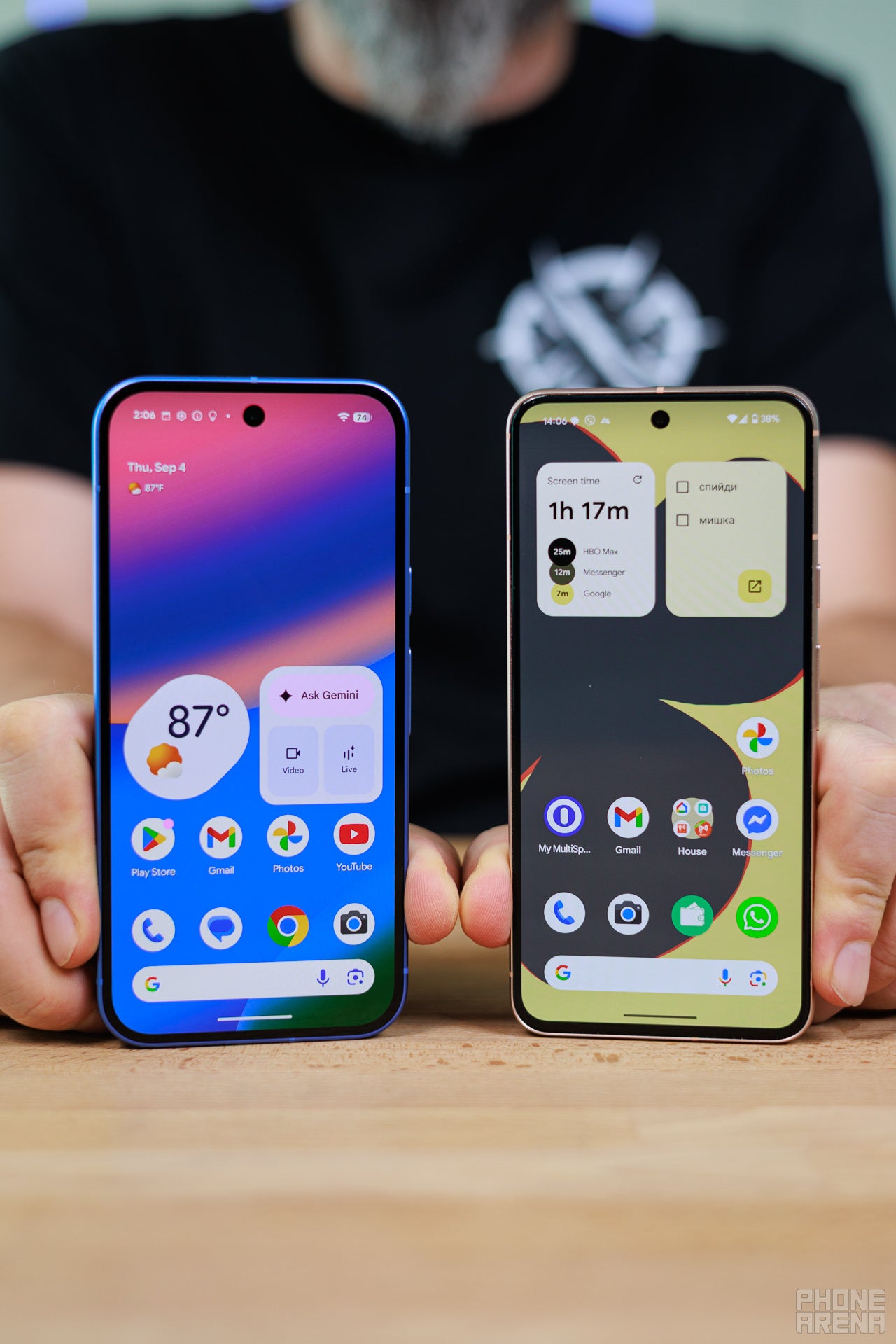
The Pixel 10, though, will come with some gains. The new Tensor G5 is now built by TSMC on a 3nm process — finally meeting the competition’s standards. Google says about 34% improvement in CPU power, which means it still does not out-muscle the latest Snapdragon 8 Elite nor the Apple A18 Pro, but it does get closer to them. And it is definitely much faster than the Tensor G3 inside the Pixel 8.
CPU Performance Benchmarks:
And yeah, compared to the Pixel 8 from two generations back, we can see a good 30-ish percent improvement in numbers. The Pixel 10 definitely feels snappier, too. Not that we had a lot of complaints about the Pixel 8‘s software optimization, but subtle increases in response can definitely be felt now.
GPU Performance
And, with GPU performance, we get a nice 25-50 percent boost, too. So, gamers will enjoy the new Pixel 10 more… somewhat. These gains to come at the cost of battery life, but we’ll get to that in the battery section.
Software upgrades are, of course, in tow!
The Pixel 10 comes with Magic Cue — on-device AI will analyze on-screen content, cross-reference between your apps such as Calendar, Contacts, Maps, et cetera, and give you one-tap actions or replies. For example, if someone asks you about you evening plans, or arrival time — Magic Cue will generate an actually accurate auto-reply. All on-device, with the Tensor G5 power backing it. If that’s too much for you — you will be able to disable Magic Cue or choose which apps it has access to. Supposedly, it’ll be an exclusive feature for new Pixels, as it needs the CPU power for on-device processing.
The Pixel 10 also comes with Live Voice Translate for calls, so you can have an actual digital translator busting down that language barrier between you and a foreign person on the other end. The Pixel 8 will not support that.
Call Screening has been pretty cool — where the Assistant picks up for you when it’s an unknown number and will give you a live transcript on screen, so you can choose whether to pick up or not. It’s being upgraded to now take messages when you miss or decline a call, too. No reason to believe that will be a Pixel 10 exclusive, but who knows.
Plus, the Pixel 10 will ship with Android 16 and a full seven years of updates. The Pixel 8 will also be eligible for Android 16 and still has 5 more updates to go before end-of-support.
Camera
Two years = one extra lens. And it changes everything.
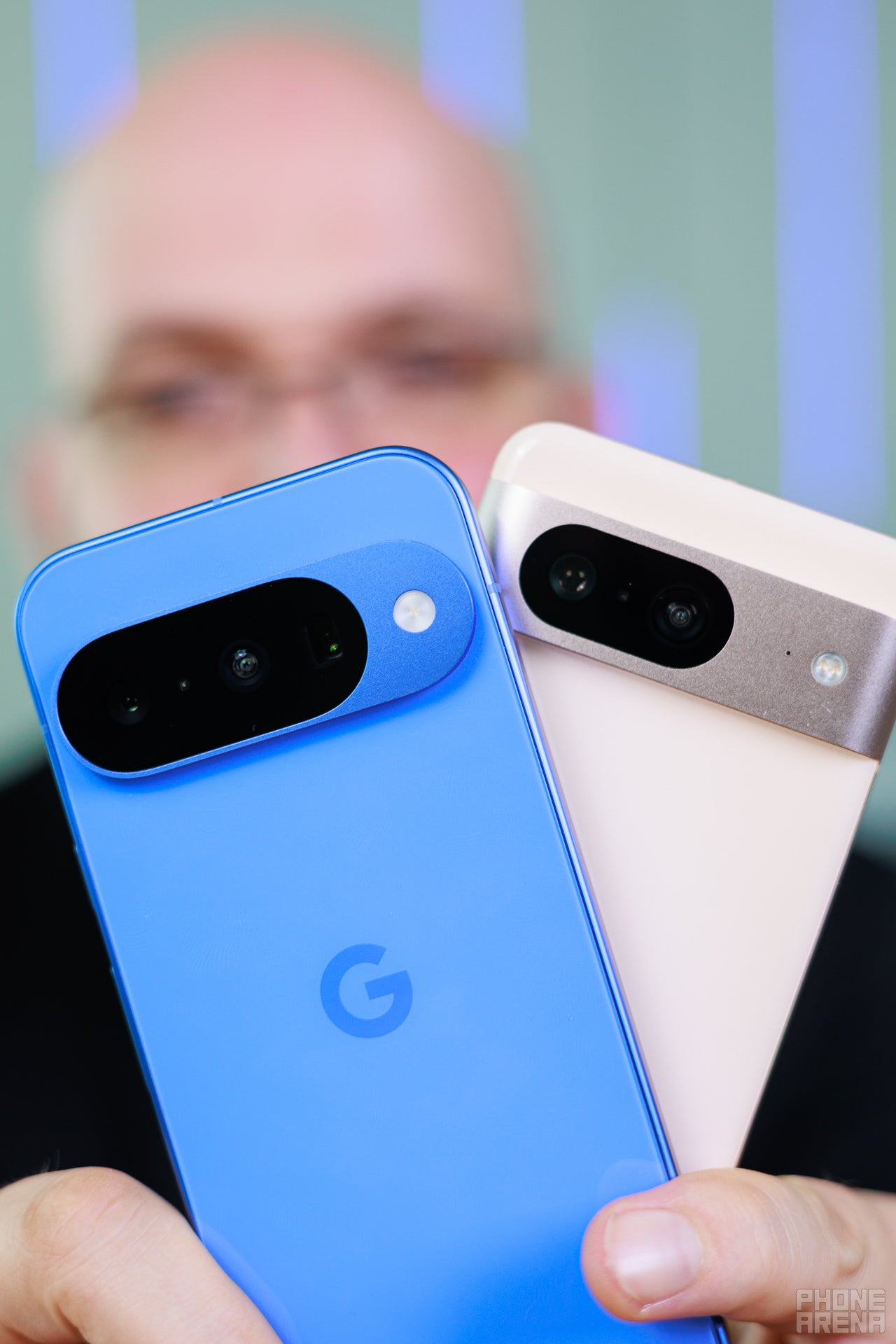
Pixel 10 tables the turns here and changes what we expect from a “budget flagship”. It’s finally getting a triple-lens setup, with a 48MP main, 13MP ultra-wide, and — surprise — a dedicated telephoto camera with a 10.8MP sensor and 5x optical zoom. It also supports SuperRes zoom to 20x, unlike its Pro siblings that’ll now hit 100x. But hey, it’s an upgrade for the base model and we’ll take it!
If you are bad at taking photos, the Pixel 10 has a new Camera Coach. AI will analyze the scene you are trying to capture and give you suggestions to improve it. Plus, small blurbs of text to let you know exactly why something would look better. Pretty useful!
Main Camera
You’d be hard-pressed to find exact differences and upgrades from one main camera to the next. Colors and details are about the same leve, so is exposure.
In lower light, the Pixel 10 boosts exposure a bit more, but other than that — results with the main camera are, again, similar.
Zoom Quality
The Pixel 10 has a zoom lens and that gives it a leg up, especially when it comes to expanding the results of max zoom. That sad, the Pixel 8, surprisingly, holds its own quite well at 10x here. But, still, it’s a bit noisier and softer.
Ultra-wide Camera
Invalid image meta
When we go back to the ultra-wide cameras, again, you will be hard-pressed to find a lot of differences between images. The sensors are slightly different on paper — 13 MP on the Pixel 10 and 12 MP on the Pixel 8 — and their performance is very similar.
Selfies
The selfie camera has definitely seen an upgrade, with much better details, contrast, dynamics, and skintone.
More Camera Samples
Battery Life and Charging
Bigger cell, better efficiency
The Pixel 8 shipped with a modest 4,575 mAh battery. The Pixel 10 bumps that up by quite a lot to 4,970 mAh! But there are more things to consider — the 3 nm build of the Tensor G5 should technically be more energy-efficient than the old Tensor’s 4 nm. No more teasing, here’s how they fared on our battery test:
PhoneArena Battery and Charging Test Results:
For browsing, which is the lightest task we test these phones for, we definitely get a huge boost in battery endurance. The Tensor G5 is surfing smoothly, barely drawing as much energy. When we go to an infinite YouTube playlist, things kind of even out. Constant streaming is a draw on the battery, and while the Pixel 10 gave us half an hour more, we can’t call that a huge improvement.
Charging has been boosted — now 30W wired and 15W wireless, from 27W wired and 18W wireless. Wait, those wireless numbers are a bit off? The Pixel 8 had a special Pixel Stand charger, which made it possible to hit 18W, otherwise you got 12W on standard Qi. The Pixel 10 supports Qi2, so it gets 15W from in-house or 3rd party chargers. Only the Pixel 10 Pro XL supports Qi2.2 and 25W, sadly.
But yes, we did say full Qi2 support — with the magnets and all. In fact, Google is calling it Pixelsnap and launching stands and chargers that magnetically latch on to your phone. 3rd party offers should follow.
Audio quality and haptics
Pixels have had great speakers for years, even the base models (don’t mention the Pixel 5). They have a bit of a mid hump and not a lot of bass — they don’t have the bodies of an XL to work with. But the sound is decently loud and detailed to be pleasing on both.
And, with haptics, Google has had very good clicking engines for years now, and they give you fast and accurate touch feedback.
Specs Comparison
| Pixel 10 | Pixel 8 |
|---|---|
| Size, weight 152.8 x 72.0 x 8.6 mm 204 g | Size, weight 150.5 x 70.8 x 8.9 mm 187 g |
| Screen 6.3″ OLED 120Hz | Screen 6.2″ OLED 120Hz |
| Processor Google Tensor G5 3nm | Processor Google Tensor G3 4nm |
| Versions: 12/128GB 12/256GB LPDDR5X | Versions: 8/128GB 8/256GB LPDDR5X |
| Cameras: 48 MP main 13 MP ultra 10.8 MP telephoto 10.5 MP front | Cameras: 50 MP main 12 MP ultra – 10.5 MP front |
| Battery: 4,970 mAh | Battery: 4,575 mAh |
| Charging: USB-C 30W wired 15W wireless Qi2 | Charging: USB-C 27W wired 18W wireless |
Summary
OK, so the Pixel 10 brings about a nice camera upgrade, a bump in battery endurance (depending on what you use it for), and a noticeable performance increase. Plus, extra AI features that seem like they will be exclusive to the newer Pixels and beyond (Live Translation, Magic Cue). While the Pixel 8 is still a pretty good phone, there are things in here to compel you to upgrade. But if you choose to keep the 2-year-old phone for another year, you should be good.