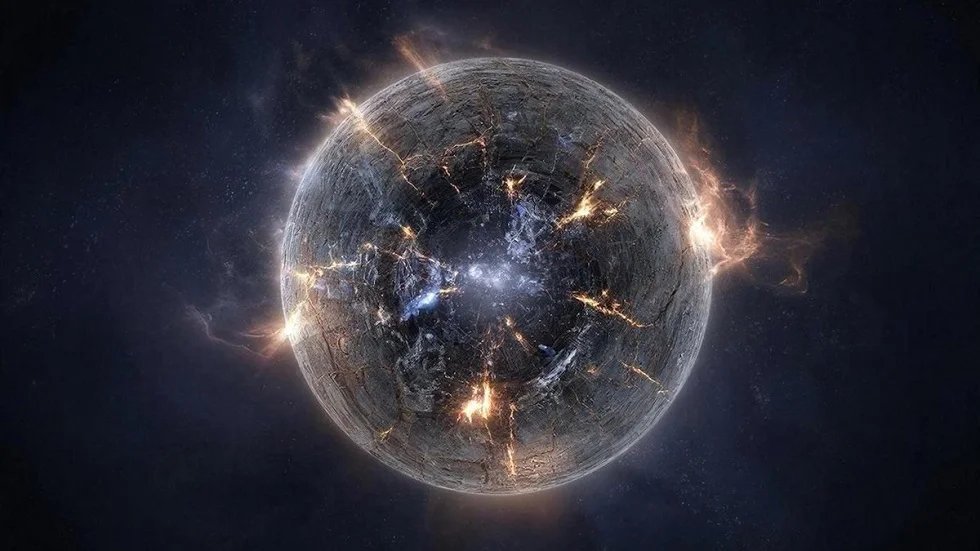
For The First Time.. A Relationship Was Observed Between The Brightness Of A Neutron Star And Its Rotation
For The First Time.. A Relationship Was Observed Between The Brightness Of A Neutron Star And Its Rotation

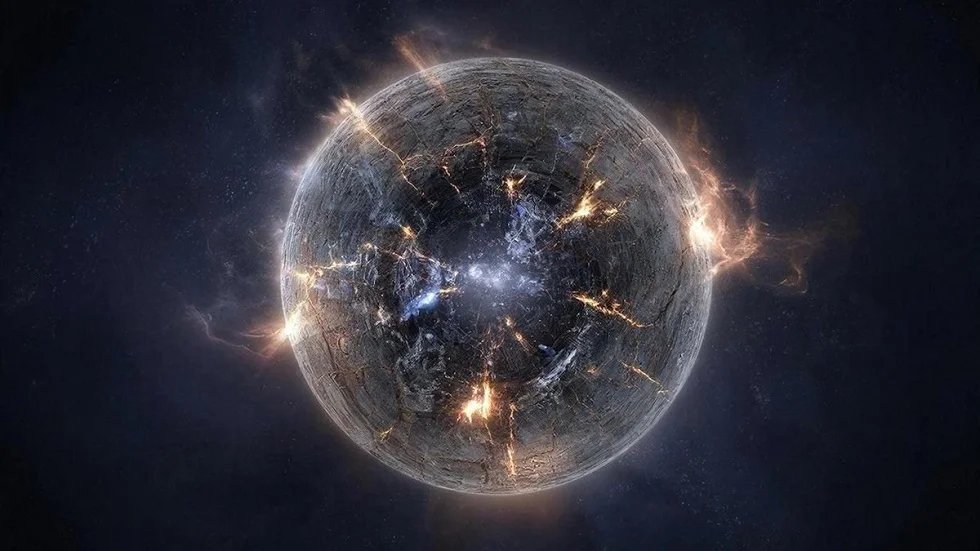

Sometimes some celestial objects become unusually bright as a result of supercritical accretion during the flow of large amounts of gas, a phenomenon whose mechanism has been poorly understood for a long time. In this context, a team of astronomers studied the neutron star NGC 7793 P13, located at a distance of about 10 million light-years from Earth. Its mass exceeds the mass of the sun, while its size does not exceed the size of a large city.
The researchers relied on analyzing data collected between 2011 and 2025 from four satellites specialized in X-ray monitoring, namely XMM-Newton, Chandra, NuSTAR, and NICER. The results showed a rapid increase in the star’s X-ray luminosity during the year 2022 compared to its low level of activity in 2021. By 2025, its brightness had increased than a hundred times, and this was accompanied by an approximate doubling of its rotation speed.
Scientists concluded that the structure of the accretion columns formed above the poles of the star is unstable, and is subject to periodic changes every about ten years, which is directly reflected in the intensity of the X-ray radiation and the rotation frequency. The higher the accretion column, the higher the luminosity of the star and the faster its rotation. These results contribute to deepening the understanding of the mechanisms of supercritical accretion in neutron stars.
It is noteworthy that a neutron star is an ultra-dense core that is formed after the explosion of a type II supernova.
Its main characteristics:
- Massive density:A teaspoon of its matter weighs billions of tons on Earth, because most of it is made up of packed neutrons.
- Small size:Its diameter is only ~10-20 km, but its mass is ~1.4 to 2.3 solar masses.
- Strong gravity:Its gravitational field is billions of times stronger than Earth’s.
- Rapid rotation:Some rotate hundreds of times per second when they are born.
- Very strong magnetic field:Billions to trillions of times stronger than Earth’s field.
Its types:
- Pulsar:It emits regular beams of radiation like a lighthouse due to its rotation.
- Magnetar:It has a super strong magnetic field that may cause blasts of energy.
These stars are formed when a massive star’s fuel runs out, its core collapses under its gravity, and protons and electrons fuse to become neutrons.
Source: Naukatv.ru
Disclaimer: This news article has been republished exactly as it appeared on its original source, without any modification.
We do not take any responsibility for its content, which remains solely the responsibility of the original publisher.
Author:
Published on:2025-12-16 16:59:00
Source: arabic.rt.com
UAETodayNews delivers the latest news and updates from the UAE, Arab world, and beyond. Covering politics, business, sports, technology, and culture with trusted reporting.
Disclaimer: This news article has been republished exactly as it appeared on its original source, without any modification. We do not take any responsibility for its content, which remains solely the responsibility of the original publisher.
Author: uaetodaynews
Published on: 2025-12-16 19:41:00
Source: uaetodaynews.com

Latest news, essential insights and practical guides to life in Italy from The Local, Europe's leading independent voice